Shigeo YACHI Laboratory
- index
menu
Welcome to my Lab!

| Affiliation | Center for Ecological Research, Kyoto University |
| yachi [at] ecology.kyoto-u.ac.jp | |
| Postal address | Hirano 2-509-3, Otsu 520-2113, Japan |
Research Introduction
Joys of theoretical ecology
My specialty is theoretical ecology.
Using theoretical approaches and mathematical models,
I attempt to unravel the mysteries of various ecological phenomena occurring in Earth's ecosystems,
such as population dynamics, symbiosis and coevolution between different species,
the relationship between biodiversity and ecosystem functionings, methods for ecosystem restoration,
and interactions between ecosystems and human society.
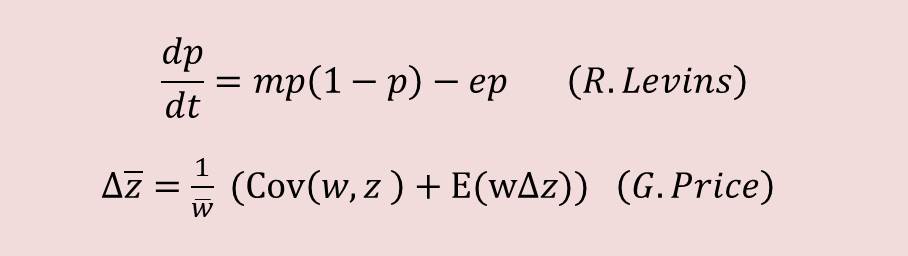
In theoretical ecology, we translate and analyze phenomena and hypotheses broadly related to ecology, evolution, and the environment
into mathematical models (a process known as "modeling").
In an attempt to capture the essence of the phenomenon or hypothesis I want to understand in a single model,
I constantly redesign and reconstruct the model, dramatically deepening my understanding of that phenomenon or hypothesis.
Deepening my understanding through modeling leads to new ideas and working hypotheses for experiments and field research,
and ultimately creates new theoretical challenges. This is the strength and joy of theoretical ecology!
Research Topics
My research themes are (1) unraveling the mysteries of the Earth's ecosystems and (2) managing watershed ecosystems.
Populations, communities, and ecosystems, composed of individual organisms, possess the properties of so-called "complex adaptive systems,"
which generate unexpected macro-level phenomena and patterns through successions and evolution caused by interactions.
(1) Unraveling the Mysteries of the Earth's Ecosystem
Since life first appeared on Earth approximately 4 billion years ago,
the current Earth's ecosystem has evolved through various ecological and evolutionary processes.
But what kind of world is this Earth's ecosystem as a whole?
In other words, what kind of world is the Earth-type life world, where the phenomenon of life has developed on planet Earth?
What are the characteristics of Earth's ecosystem? Furthermore, how universal are the characteristics of the Earth-type life world?
I believe that answering these questions is one of the major goals of modern ecology.
Ecosystems such as Earth's forests, grasslands, rivers, lakes, and oceans are home to a diverse range of organisms,
from bacteria and other microorganisms to multicellular macroorganisms such as animals, plants, and fungi,
each living on their own distinctive spatiotemporal scales.
How does this coexistence of diverse organisms on planet Earth, with such large differences in size (power-law levels), occur,
and through what mechanisms and processes has it been formed?
While it is not possible to compare it with life phenomena on other planets at this point,
I believe that focusing on the issue of the formation of the multilayered spatiotemporal scales of Earth's ecosystems,
triggered by the emergence of multicellular organisms, will be key to further deepening our understanding of Earth's ecosystems as a whole.

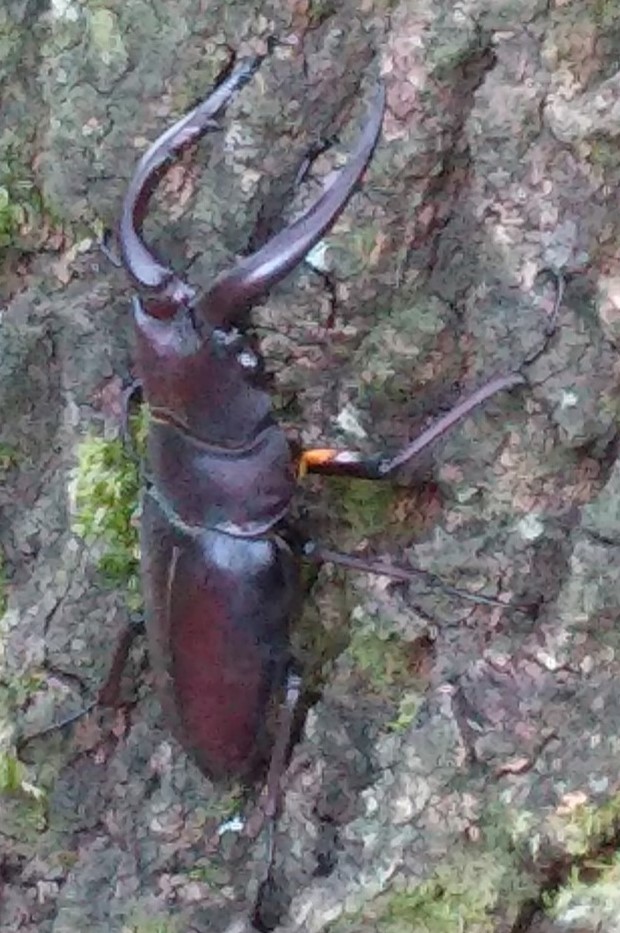
Unraveling the Mystery of Multicellular Life
Multicellular organisms, through sexual reproduction and the creation of diverse body plans and sizes,
dramatically increased the diversity of the biological world and are thought to have had a major impact
on the formation of today's multilayered spatiotemporal patterns of living organisms.
Multicellular organisms maintain their individual integrity and functionality through the altruistic behavior of clonal cell populations.
How did natural selection affect the genetic, cellular, and individual levels of multicellular life during the formation of individuality?
I am theoretically examining various hypotheses regarding this question,
with the goal of understanding the essence of multicellular life and the framework of the Earth's ecosystem.
(2) Watershed Ecosystem Management
This research is being conducted as a theme in global environmental studies.
It has only been 100,000 years since modern humans first appeared on Earth's ecosystem, but humans have dramatically altered it.
It is said that for humans to live sustainably on planet Earth, we must significantly change the way our society is structured.
But how is this possible?
One key to addressing this issue is focusing on watershed management.
Watersheds are not only units for flood control and water utilization that are closely related to human life,
but also natural spatial units for managing river and lake ecosystems in order to preserve and restore them.
I believe that creating watershed management systems that enable local human communities and watershed ecosystems
to coexist will also lead to the resolution of global environmental problems.
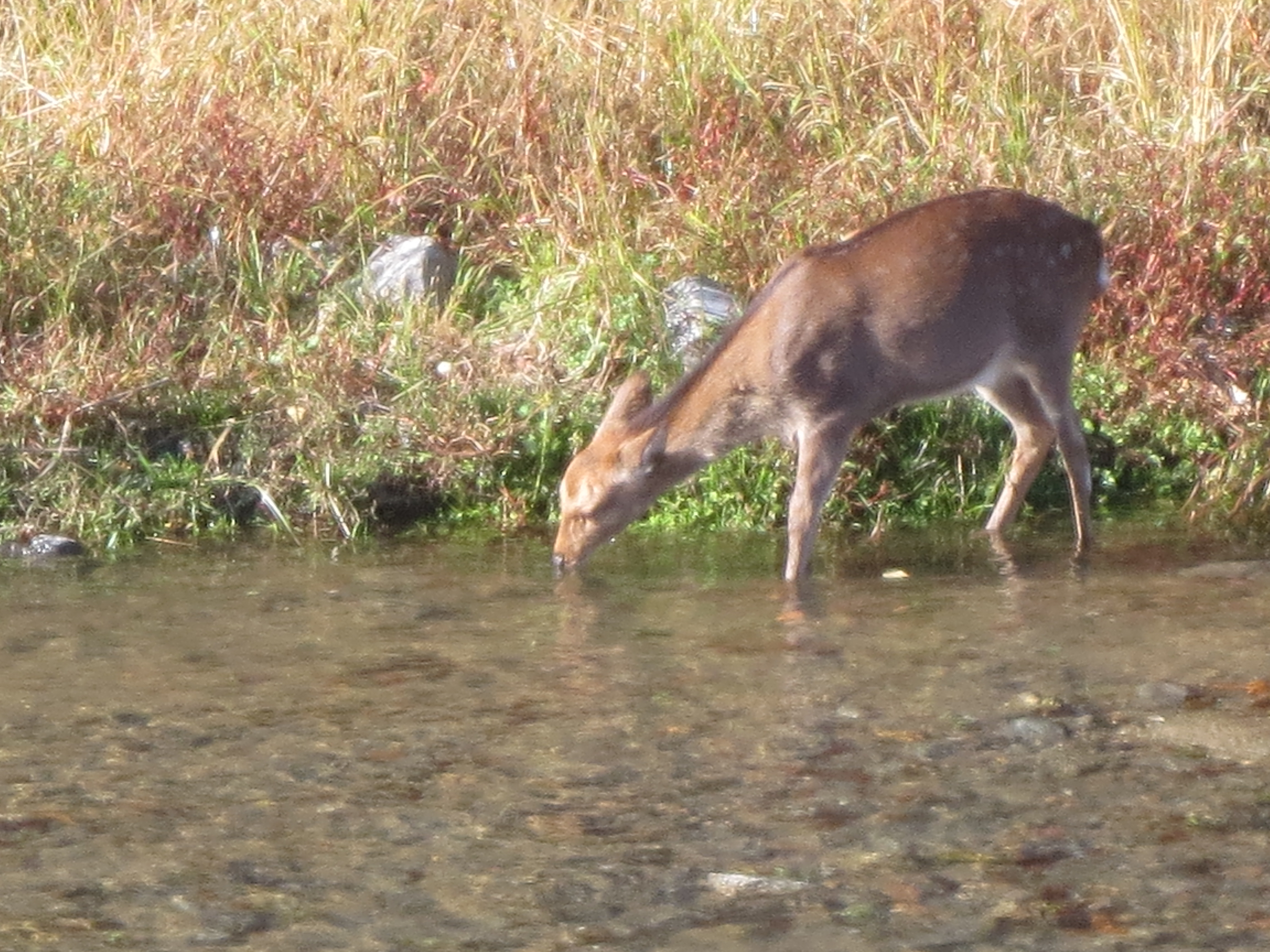
My research is an accumulation of specific phenomena and issues that interest or concern me at any given time, but by solving each mystery one by one, I hope to get closer to understanding the overall picture of the global ecosystem in which I was born and live!
For specific details of the research, please see "Research" (sorry, currently only available in Japanese).
Links
To those considering a master's, doctoral, or postdoctoral position in my lab
I'm sorry. Currently, my lab is not recruiting master's or doctoral students, nor is it accepting postdoctoral researchers.
The reason is that I will be retiring at the end of March 2027, and will not be able to provide sufficient guidance.
In particular, for those wishing to study abroad from overseas, there are many labs in Japan where you can study theoretical ecology (or mathematical ecology). I hope you will find a lab that suits you.
Update
- Updated on 18 February, 2026
Copyright © 2014 Shigeo YACHI